Paper, Pens, and Peak Focus in a Hyperconnected Age
Today we dive into analog productivity in a digital world, discovering how deliberate, tactile tools—paper notebooks, fountain pens, index cards, and printed checklists—restore focus, memory, and momentum amid notifications. Expect practical routines, hybrid workflows, and stories from real people balancing screens with slower, wiser methods. Bookmark, subscribe, and share your experiments; together we will map rituals that protect attention, channel creativity, and turn intentions into finished work without declaring war on technology, yet refusing to let it set the pace.
Why Handwriting Still Wins
Across cognitive science and classroom observations, writing by hand improves encoding, comprehension, and recall by engaging visual, motor, and spatial circuits simultaneously. The subtle friction of pen on paper slows thinking to a humane tempo, discouraging mindless copying and encouraging synthesis. When distractions are reduced, intentions become visible, and the page reflects priorities honestly, revealing constraints, trade-offs, and next actions with surprising clarity.

Retention through kinesthetic traces
Each stroke leaves a kinesthetic footprint your brain indexes alongside meaning, imagery, and layout. That multimodal bundle becomes a durable memory cue, explaining why lecture notes rewritten by hand often outperform verbatim transcripts. The act is not decoration; it builds structure, emphasis, and insight directly into muscle memory.
Cognitive pace that favors depth
Speed without thought is costly. The manageable drag of handwriting forces choices about keywords, diagrams, and summaries, inviting active processing rather than copying. This cognitive pace favors depth, connection-making, and judgment, which translate into clearer recall later and more confident action when pressure rises.
Spatial context as a mental map
Margins, arrows, and the physical placement of ideas create a map your brain recognizes later. Flipping to a dog-eared corner, remembering a sketch near the page bottom, or seeing color-coded headings becomes a reliable retrieval hook, guiding you back to context quickly.

A Dependable Analog Toolkit
Selecting a few sturdy tools reduces decision fatigue and turns preparation into a calming prelude to work. A pocket notebook for capture, a dedicated project pad, a dependable pen, and a stack of index cards build a flexible system. These artifacts invite action, travel well, and survive low-battery moments, keeping ideas moving when Wi‑Fi, apps, or power are unreliable.
Daily Rituals that Create Momentum
Consistency beats intensity. Short, rhythmic check-ins anchor attention and rescue you from reactive habits. Design three lightweight ceremonies—morning mapping, midday triage, and evening closure—so planning never expands to consume the work. These analog guardrails turn scattered obligations into visible, finishable pieces while restoring a sense of progress.
Morning mapping in fifteen minutes
Before email, open your notebook, scan your horizon, and choose one meaningful outcome to secure by lunch. Sketch constraints, list three enabling tasks, and block a modest timebox. This ritual replaces aimless surfing with a single courageous commitment you can actually deliver today.
Midday triage without theatrics
Halfway through, capture new inputs on a fresh page, annotate what truly matters, and renegotiate any over-optimistic promises. Moving unfinished items to tomorrow is allowed; hiding them is not. This brief pause re-centers your plan on reality, not fantasy, preserving energy for execution.
Blending Paper with the Right Apps
Analog and digital are allies when each plays to strengths. Use paper for thinking, sequencing, and deciding; use apps for storing, sharing, and scheduling. A simple capture pipeline, calendar bridges, and a searchable archive create flow without trapping you in endless screens or scattered piles.
A clean capture pipeline
Jot on paper first, then batch-transfer actions to a single digital list after work blocks, not during. Photograph sketches into a notes app only when needed. This rhythm respects deep focus while ensuring nothing important disappears between pages, screenshots, and your head.
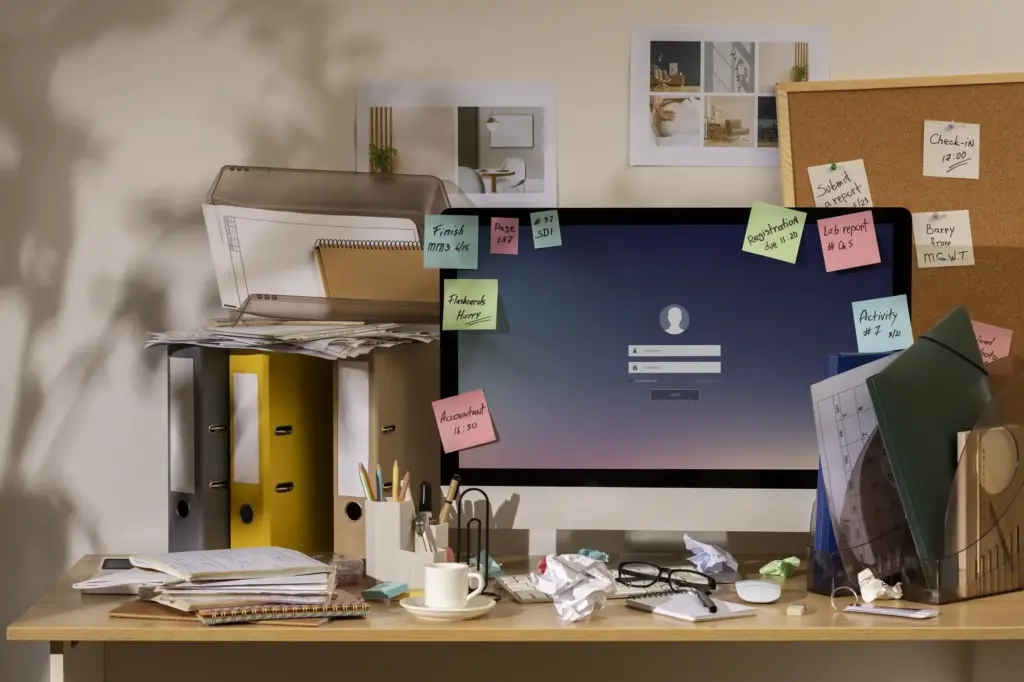
Calendars that protect thinking
Block analog sessions on your digital calendar with explicit titles like Pen Plan or Card Sort, and treat them as real meetings. Invite colleagues when collaboration is required. Visibility deters overbooking and normalizes quiet, paper-based work as essential time, not empty space.
Guardrails against Distraction
Move the phone, move your mind
Place the phone in another room during analog sprints, and use a simple kitchen timer instead. Standing up to fetch it becomes an intentional act, not an impulse. That extra friction buys back stretches of uninterrupted depth no app can gift.
One page, one objective
Clear the desk, open a fresh page, and write the single outcome you seek in bold at the top. Keep only the materials that support that result. Physical narrowing quiets mental noise, making it natural to start and strangely satisfying to finish.
Silent signals for teammates
Agree on visible signals—a notebook open beside a pen means do not disturb for thirty minutes unless urgent. Pair it with a status light or calendar block. Clear agreements reduce accidental interruptions and foster a respectful culture of deep work across the team.
Stories from the Field

Index cards lift a biology grade
A sophomore swapped scrolling for nightly card drills, condensing lectures into colorful prompts and diagrams. Weekly, she spread cards across her dorm floor to spot gaps. Scores climbed, but more importantly, confidence returned as effort translated into mastery she could feel and explain.
A manager tames meetings with paper
Before each meeting, he sketches desired outcomes and three decision questions on a single sheet. Mid-discussion, he parks tangents in a margin box. Ending early became common, and his team began arriving prepared, knowing clarity would be captured visibly and acted on.

A designer rebuilds momentum offline
Stuck in revision loops, she unplugged for two afternoons, filled five pages with thumbnail sketches, and arranged them on the wall. Seeing the whole sequence sparked a bolder direction. She scanned the favorites, shared decisively, and shipped on schedule without second-guessing every pixel.
All Rights Reserved.