Unplugged Momentum: Crafting Analog Deep-Work Sprints

Why Screens Sabotage Focus
Designing Your Daily Analog Blocks
01
The 50–10 cadence
Try a simple loop: fifty minutes of concentrated effort, then ten minutes of analog recovery. During the break, walk, stretch, breathe, or jot insights—no scrolling. Two or three loops complete a morning. The predictability reduces decision fatigue, while the fixed rest guards stamina. If your work demands longer arcs, stretch to seventy‑five and fifteen. Treat cadence as a prototype, tune it weekly, and let your energy patterns, not wishful thinking, decide the configuration.
02
Prep ritual checklist
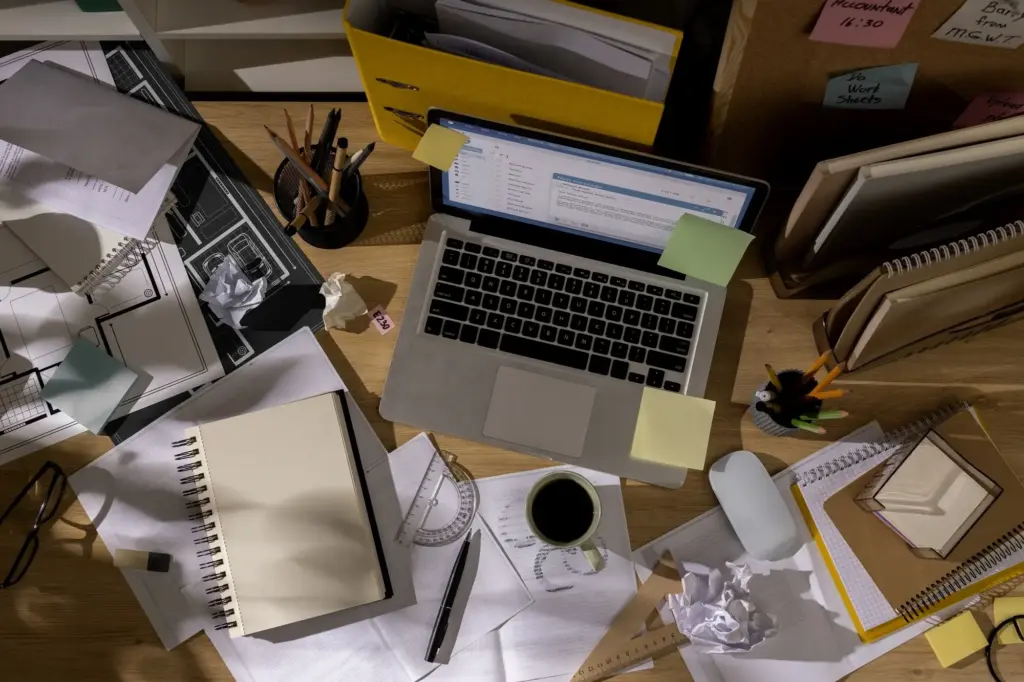
Before starting, stage everything: notebook, index cards, reference printouts, pen, highlighter, ruler, and a physical timer. Write a crisp intention line, underline the deliverable, and estimate one to three concrete wins. Set your status card outward—“In a sprint, back at 11:10.” Put headphones or earplugs within reach, a glass of water nearby, and remove anything that vibrates. The easier the start, the rarer the excuses, and the steadier your depth will feel.
03
Shutdown and log
Finish by recording what moved, what stalled, and one sentence you would give a teammate about next steps. Migrate only essential items, close loops you can complete in two minutes, and park the rest in a paper queue. Circle tomorrow’s first action. Finally, tidy the desk so your future self arrives to a clear runway. Closure like this lowers anxiety overnight and makes the next sprint begin with certainty rather than reorientation.
Tools That Don’t Glow
Index card workflows
Use three lanes on cards—Doing, Waiting, Done—kept in a small desktop tray. Limit “Doing” to three. Each task gets a verb‑first headline, a checkbox, and one constraint. Move cards physically when status changes; the movement rewards progress more honestly than pixels. At day’s end, archive Done in a banded stack, review Waiting for nudges, and copy only active cards forward. The frictions are intentional, light, and surprisingly motivating when you can touch them.
Timekeeping without screens
Choose a quiet analog timer with a dial you can set without looking, or an hourglass that measures a gentle interval. Avoid phone-based timers during sprints to prevent slippery taps. Pair the timer with a starting bell and a closing chime ritual to bracket effort. Let auditory cues carry the schedule so your eyes can stay on paper. The goal is rhythm you can feel, not numbers that invite glances toward screens.
Paper systems that scale
Bullet journaling handles dailies and logs, Cornell notes capture meetings and readings, and a slip‑box cross‑links permanent insights by unique identifiers. Together, these paper systems scale beyond a single notebook without losing simplicity. File reference material upright in labeled folders, keep indexes updated, and reserve colored tabs for key projects. When questions arise, you can retrieve context quickly without search bars. The archive becomes a living studio, not a dusty warehouse of pages.
Spaces That Invite Deep Work
Writing and ideation
Complex problem solving
Team and Calendar Alignment
Sustaining the Habit
All Rights Reserved.